
Creating a homeschool schedule that works for everyone feels like such a win! When it’s working, there’s structure without the stress. And most importantly, everyone actually enjoys fun days of learning together.
Whether this is your first year of homeschooling or you’re looking to refresh your daily routine, I hope this guide will help you in creating a schedule that encourages calm and consistency so you can actually enjoy the process of learning alongside your kids!
Keep reading to learn:
- What is a homeschool schedule
- Benefits of establishing your schedule
- Types of homeschool schedules
- Real-life examples
- How our own routine has drastically changed over the years
- Tips for making it work
- When to let scheduling go
- Free printable scheduling templates
Disclosure: This post contains affiliate links and I could earn a commission if you make a purchase using them. This comes at no additional cost to you and all opinions expressed are my own.
What is a homeschool schedule (and what it isn’t)
Think of your homeschool schedule as your family’s unique rhythm rather than a school timetable. After all, one of the benefits of homeschooling is that it doesn’t have to look like traditional school!
Instead, your homeschool schedule might include a few of the following elements:
- Time blocks (Math at 9am, English at 10am, etc.)
- Loop (Rotating between subjects like art, music, and history on a daily basis)
- Checklist format (Bible, piano lesson 11, 2 pages of copywork, explore bugs in the backyard, etc.)
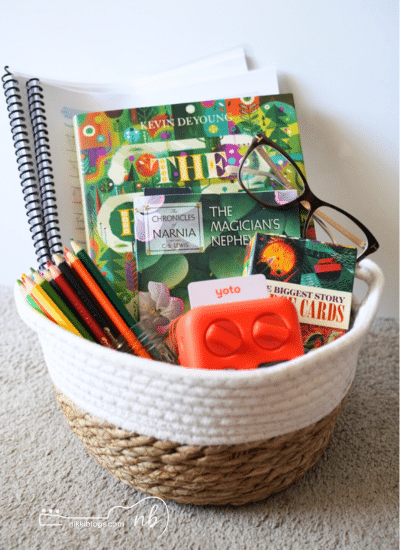
- Family routines (starting your day with a morning basket, playing an education game, read aloud chapter book, etc.)
Your schedule should work in harmony with your life NOT against it. You should also leave space to allow for unexpected events when needed.
We’ll talk more about schedule types in a bit!
Why a Homeschool Schedule Matters
Creating a schedule can help reduce decision fatigue.
Instead of confusion about what to do next, you get to choose from a number of predetermined lessons or activities and work on them at your family’s pace.
Because once you’ve accomplished the things on your to do list, you’re free to do the other things you want to as well!
So let your homeschool schedule support your days rather than controlling them.
Types of Homeschool Schedules
Let’s take a closer look at different ways you can create your own unique homeschool schedule.
Structured Time
This system of structured hour-by-hour blocks works great for families that are new to homeschooling or are transitioning from the public or a private school systems.
Course work is completed during a set time with buffer blocks for snacks, errands, and downtime.
Pro Tip: Consider using a planner (I really like this homeschool planner – it’s the one from the photo below) to write out your schedule and/or write it out on a monthly calendar (I buy this one every year – also pictured in the photo below) and hang it somewhere in the home where everyone can see it.

Block Scheduling
This scheduling method reminds me a bit of university – entire days or long chunks of time are devoted to a single subject.
This strategy is ideal for deep focus like unit studies.
Going forward, this is the strategy I’d personally use and recommend for Gather Round units! We tried doing the Europe unit four times a week (including the cooking portion!) after completing core subjects of math and English but the days ended up just being far too long.
Instead, I’d save core subjects for one day a week during a unit study month.
To visualize your work flow using this method, you could use a dry erase board or weekly calendar to pencil focus area in.
Loop Scheduling
This method of homeschool scheduling utilizes a rotating list of subjects – for example: Monday: English, Tuesday: science, etc.).
It works extremely well for some households because it keeps learning fresh and is forgiving of interruptions.
The simplest approach is to just reset your loop weekly!
Since we’ll be incorporating science, nature, and history studies this year, we plan on adding a loop component to our schooling too.
For homeschooling multiple kids (grade 3 and a preschool student), this could be Monday to Wednesday: Language Arts, Math, Music, Thursday: History, Science, Nature.
Checklist or Task-Based Scheduling
A checklist style schedule is really simple – list assignments and goals without assigning times to them.
This empowers independent work in older students and helps students (and even parents) build time management skills.
A large checklist (I enjot writing one every morning and like this one for the fridge!) or an agenda is a powerful motivator for students using this method.
More ideas to get your homeschool organized:
- Small Homeschool Room Ideas that Make a Big Impact!
- The Ultimate Homeschool Supply Shopping List
- Create an Amazing Kid-Friendly Music Room in Your Home
Real-Life Sample Schedules
Applying your real life schedule could focus on one scheduling type or borrow elements from a few. Here are some ideas according to age group and life stage.
Homeschool Schedule for K–2
- Morning: Morning basket (read-aloud, art, and games)
- Late morning: Math and English (30–45 min)
- Lunch: Reading and God’s Big Story podcast (we use the kids’ Yoto player)
- Afternoon: Music, nature journaling, and play
Homeschool Schedule for Grades 3–6
- Language arts (45 min)
- Break (15 min)
- Math (45 min)
- Break (15 min)
- Science or history (45 min)
- Lunch (45 min)
- Electives (music, cooking, art, etc.)
Homeschool Schedule for Working Moms
- Early morning lessons before work (1 to 2 hours)
- Independent checklist tasks mid-day while mom works (reading, art, etc.)
- Field trip or outdoor adventure
I work from home and will often schedule learning time and educational activities on my days off as well.
Homeschool Schedule for Multiple Kids
- Group time: Bible/read aloud
- Independent blocks: choose activities according to age and ability
- Shared time: art, science, music
Our Real Life Schedule: Grade 3 & Preschool with a Work at Mom
Here’s a breakdown of how it started for us versus how it’s going now.
Kindergarten – The First Year
In the beginning we spent a lot of time figuring this whole homeschooling thing out and didn’t have a lot of creative lesson plans, field trips, extracurriculars, or a co-op.
We used an open and go curriculum for Kindergarten (the Good and the Beautiful) and did a lesson or two of each subject (math, language arts, and science) a day. At that time, we had just one outside class a week on Tuesdays and spent a lot of our off time visiting family and taking care of my aging parents.
Other days usually looked like the one I wrote about in this post on scheduling homeschool for Kindergarten.

Grade 3 & Preschool – The Fourth Year
I’ve learned a lot after four years of homeschooling but the most important lesson by far is not to rush things.
Everything changed for us once we started being more intentional with our learning and especially, after we started incorporating music and read alouds into our days!
Both of the girls, now 8 and 4, enjoy family music and reading times – and it sure makes for a cozy way to get our school day started and wrap the day up once it’s all done.
Our daily homeschool schedule often goes something like this.
5:00 to 7:00am: We’re all early risers so, my husband and I are usually up before 5am and the kids wake up between 6:30 and 7am (I’ll update my homeschool mom morning routine soon).
7:00 to 8:00am: The girls play for about an hour and have breakfast while we do our bible study.
We’re currently working through the Bible Study Kids and plan on start the Biggest Story Bible curriculum in the fall.
9:00am: When everyone is ready, we dive into a read aloud book (at the time of writing this post, we’ve just started the Chronicles of Narnia and the kids love it).
I’ll read one chapter a day while the girls do handwriting, copywork, tracing practice, or draw pictures in their art books.
Sometimes we might play a game afterwards too – these are a few of our favourites:
By the time we wrap up our morning basket, it’s usually around 10 a.m. so we’ll pick a subject to dive into what we call “book work’” – or textbook-based learning.
Book work usually starts with language arts because it’s a topic that both kids can do together. I’ll get my oldest started with her work for the day and then move into a lesson with my youngest.
The little one finishes in 10 to 15 minutes and my oldest works for about 20 to 30 minutes, depending on the assignment. After that, I ask if the oldest wants a break or to continue on and do a math lesson.
Sometimes its a yes, sometimes, she needs a mental break.
11-11:30am: After math, the girls enjoy some free play with lunch.
I use lunch time for a break too and often spend it working on my blog, doing lessons from an online course, etc. while the kids play. Our lunch break goes until about 1pm.
After that, its time for chores. Depending on the season, we’ll work on cleaning up individual rooms and/or laundry together as a team but in the spring and summer, we do a lot of work outside in the garden so chores could last 2 hours some days.
Of course, there’s a lot of play involved too!
You can check out my other blog for more about our urban homestead!
3:00pm: The kids enjoy free play for the rest of the day until dad gets home for dinner around 6:30pm.
6:30pm: Dinner
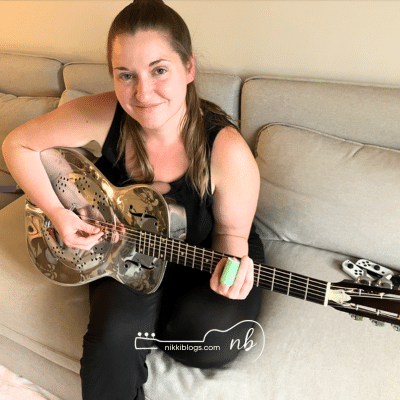
7:00-7:30pm: After dinner ends, we often sing and play guitar for about an hour as a family
8:30pm: Bedtime and devotional (the kids, my husband, and I are all really enjoying this one)
Create a Homeschool Schedule That Fits YOU
Think about your family rhythm when you start creating your homeschool schedule.
Are you morning people? Night owls? How about your kids? What time does everyone usually wake up and when are they ready to get started?
From there, you can time block your days to include things like read-alouds, lesson plans, chores, play dates, and field trips. But be sure not to over schedule – including a buffer time (an hour to two) will help keep things going at a relaxed pace.
Some families (including ours) might even benefit from an entire buffer day during the week – especially if you have a lot of extracurriculars!
Instead of scheduling for all five week days, consider leaving one day open to either catch up on schoolwork and/or make time for outings.
Sick days, unexpected get togethers, play dates, and emergencies happen too! You never know what the week will bring and leaving one day open can help to alleviate some of the pressure you might feel from missing a day or several days in a row.
Earlier this year, we experienced the unexpected loss of a dear family member. In the midst of grieving and tending to the things that follow such a loss, we stepped away from any lessons for about three weeks.
We took our time getting back into school and those buffer days helped us get back on track so we could still finish our school year in June (we originally planned on completing the year at the beginning of May).
Tips for Sticking to Your Schedule
Make it visible: Use a monthly calendar or other reminders to keep your schedule fresh in your mind (I use a planner, monthly calendar, and a daily dry-erase board that goes on the fridge)
Revisit monthly: Make sure things are actually working for you by keeping track of what you’re doing versus what you wanted to accomplish but didn’t.
Refer to your calendar, planner, or checklists kept in a notebook and adjust how much time you spend on each topic. If it feels rushed, lighten your days! If you prefer the pace you’re currently working at now rather than the one you originally planned, adjust accordingly.
When to Let Go of the Schedule
Your schedule should be a guide not a rulebook.
Like we talked about above, sometimes unexpected events happen and it’s ok to pause for a while.
Your child might also gravitate toward specific interests on some days and that’s worth embracing!
For instance, my oldest recently got excited about learning guitar again after we upgraded her acoustic guitar.
She’s excited to do lessons from the curriculum I’m writing as well as practicing full chord shapes and memorizing songs.
So, instead of sticking to the original plan that day (and several others that followed), we spent the day playing guitar together!

It can be fun for everyone to mix it up.
Another time to let go of the schedule would be when you’re experiencing burnout.
Whether you’ve been working hard on teaching the kids, decluttering the house, or at work, sometimes it just hits you.
Take time for yourself and consider keeping the kids engaged with fun learning activities they can do on their own. This could be things like:
- Checking out new library books
- Outdoor journalling
- Educational sticker books (like these)
- Done for you craft kits (like these ones or at Michael’s)
- Craft books like this one that kids can set up for independently (my oldest is 8 and this works for her and her younger sister)
- Printing out colouring pages and watching a short educational video (you can download these free European flags colouring pages)
More Free Printable Educational Resources:
I have toddler alphabet colouring pages available in English and Croatian.
You can also find preschool letter tracing pages there as well 🙂
Final Thoughts: Creating a Homeschool Schedule that Works for Your Family
Flexibility is the heart of homeschooling – so is grace.
A schedule is meant to help you find balance but it’s okay to change it or toss it out when life calls!
Enjoy the beauty of educating in your homeschool rhythm, not someone else’s.
What are your favourite tips from this post? How do you plan your homeschool days? I’d love to hear from you in the comments below or you can find me on Instagram @nikkislivarich.
Happy homeschooling, friend!
– Nikki
